- Are You Metaverse Ready?
- Posts
- Saving Sinking Nations
Saving Sinking Nations
Digital Twins and their latest potential

Bay Keeper
July 24, 2023
What’s up, MetaverseBay here.
We share what newcomers should know, what experts can be updated on, and what others might find interesting.
We apologise for the delay of this week’s Monday issue!
Let’s get down to it.
6% Done!
This week brings us Digital Twins.
Let’s hope they don’t go Hollywood rogue so we don’t have to shoot one.
“Know thyself and beware thy digital doppelgänger” - Plato 390 B.C.

Plato 390 B.C.
What’s on the table this week?
Digital Twins for Evil Intentions
Museum Heists Set to Go Virtual
A Sinking Nation gets a Virtual Home
Security concerns of Digital Twins
Do the Pros outweigh the Cons?
Digital Twins are the backbone of the Industrial Metaverse
Metaverse Fundamentals
Decentralization and its purpose
Immutability and its importance


On the table this week is NFT (Non-Fungible Token).
NFTs are basically tokens which represent the ownership of a physical or virtual asset.
One key aspect of NFTs is that they are each unique in value and cannot be traded in a 100% equal transaction.
NFTs can represent digital artwork, homes, or virtual museum pieces.
For example:
You and I each have 1 dollar or 1 Bitcoin and we trade dollar for dollar or Bitcoin for Bitcoin. The trade is equal since dollars and Bitcoin are fungible (they can be equally traded for one another).
If an NFT is minted multiple times each is still unique in value since they will be numbered. This means that #1/100 will often be seen as more valuable than #100/100 even if the assets are otherwise identical.
Explain Like I’m Five:
This week, we're talking about something called NFTs.
NFTs are like special tickets that show who owns something, like a trading card.
The cool thing about NFTs is that each one is unique and different, unlike regular trading cards that are all the same.
NFTs can be used to show who owns digital art, houses, or special things you find in a virtual museum.


Malicious Use of Digital Twins
Digital twins have tremendous potential for industrial use. Everything from floor plans to machine optimization can be achieved, but they might also be used maliciously.
While this may not be a twin that goes rogue like in a Hollywood movie, worries of data theft and sabotage have made rounds through the community.
This may involve hacks to steal competitive secrets or remotely attack operations by feeding bad data.
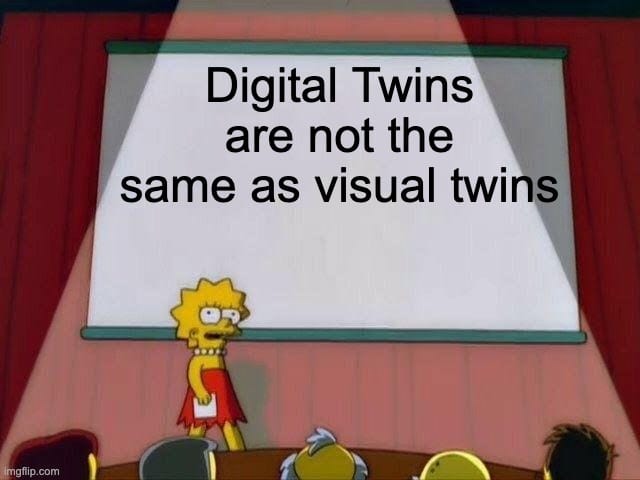
Speakers in our discussion first stressed that digital twins are not visual twins.
A visual twin would equate to your avatar, whereas a digital twin can be fed data and give feedback as if it were real or have its physical counterpart be given the same simultaneously.
The second point of consensus was that an attack on this technology would likely be too time consuming and expensive to attempt.
The layers of security provided by the blockchain for the potential of success will likely discourage any attempts at hacking.

Explain Like I’m Five:
Digital twins are like special computer copies of real things, like plans for a building or ways to make machines work better.
They are very helpful, but some people worry that they might be used in a bad way.
It's not like in the movies where a twin turns evil, but there are concerns about stealing information or causing problems on purpose.
This could mean stealing secrets from other companies or making things go wrong by giving them wrong information.
Our Take
Maybe there’s no longer a need for spies to infiltrate a company, just a good hacker.
Museum Heists are going Virtual
Imagine owning the Mona Lisa or ancient Egyptian jewels. Seems a bit too good to be true, no?
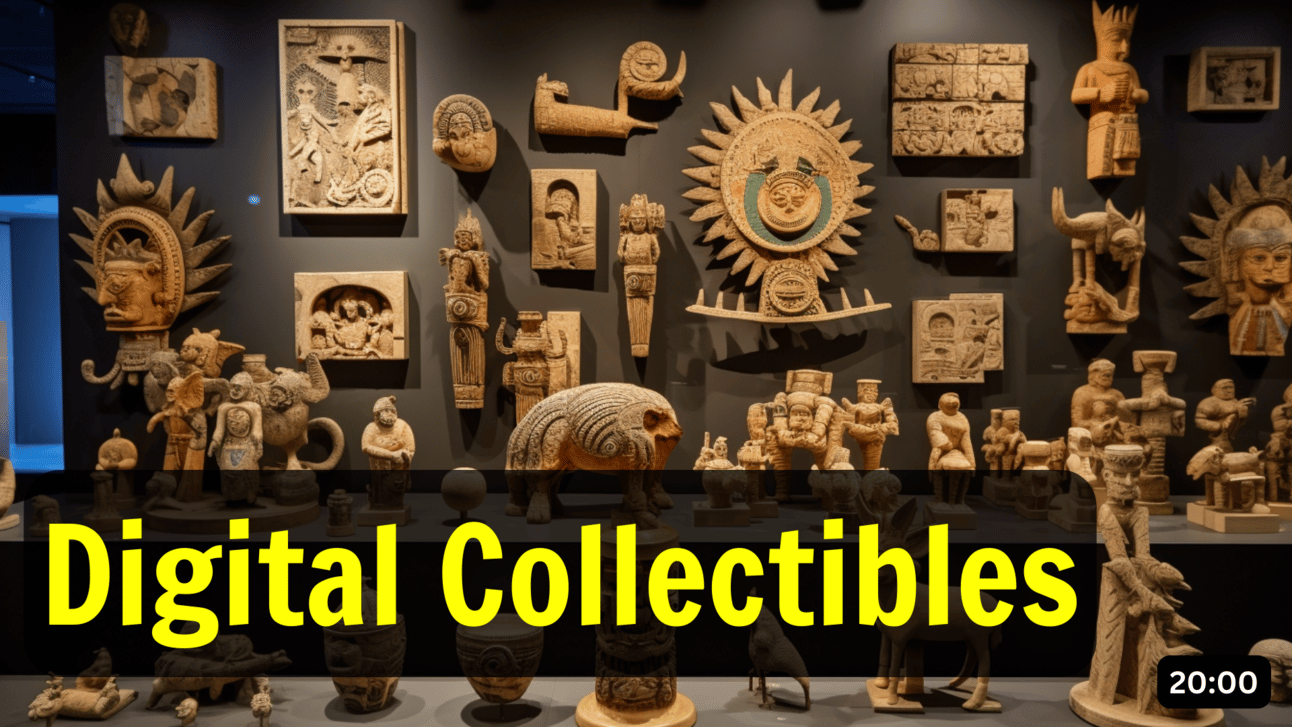
An interesting adaptation of the metaverse is the digitization of ancient artefacts, priceless paintings, and unique historical items into NFTs.
This use case allows for museum pieces to be perfected replicated into visual twin NFTs for private ownership.
Exhibits will be duplicated down to the last scratch, paint chip, and chisel mark, be accompanied by a certificate of authenticity, and be a true 1-of-1.
An attending guest shared his company’s goal to achieve this as they work alongside museums to preserve history for future generations.
Owners of the NFTs have rights to the digital items only.
They can open their own metaverse museum to display their collection, lend/rent it to an existing one, or display it in their virtual home.
Real world museums will hold the physical item and the intellectual property rights to it.
Explain Like I’m Five:
Imagine if you could have famous paintings or special ancient things that belong in museums. It sounds amazing, right?
Well, in a special computer world called the metaverse, people are making digital copies of these precious items. They turn them into something called NFTs.
These NFTs are like special pictures that look exactly like the real thing, with all the little details. They even have virtual proof they’re 1-of-1.
But here's the thing, you can only have the digital version of the item, not the real one.
You can use the NFTs to show off your collection in your own metaverse museum, or you can lend them to an open one.
Some people even display them in their virtual homes. The real museums still keep the actual items though.
It's a way to keep history alive and share it with others in a cool digital way!
Our Take
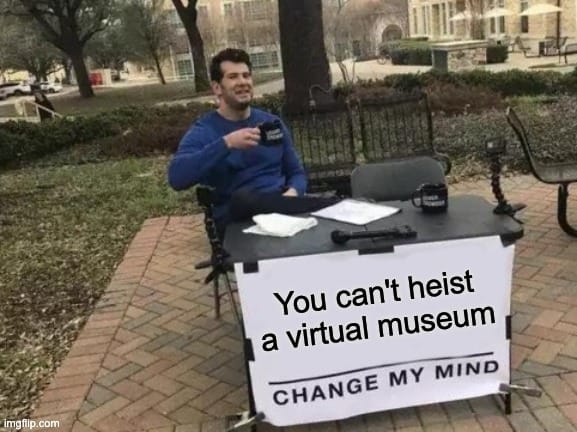
Looks like 21st century museum heists will look a lot different that traditional ones. Breaking in to steal an NFT will certainly be a challenge.
Saving Sinking Nations. One at a Time.
Preserving cultures goes beyond the digitization of museum pieces and extends to digitization of entire countries.
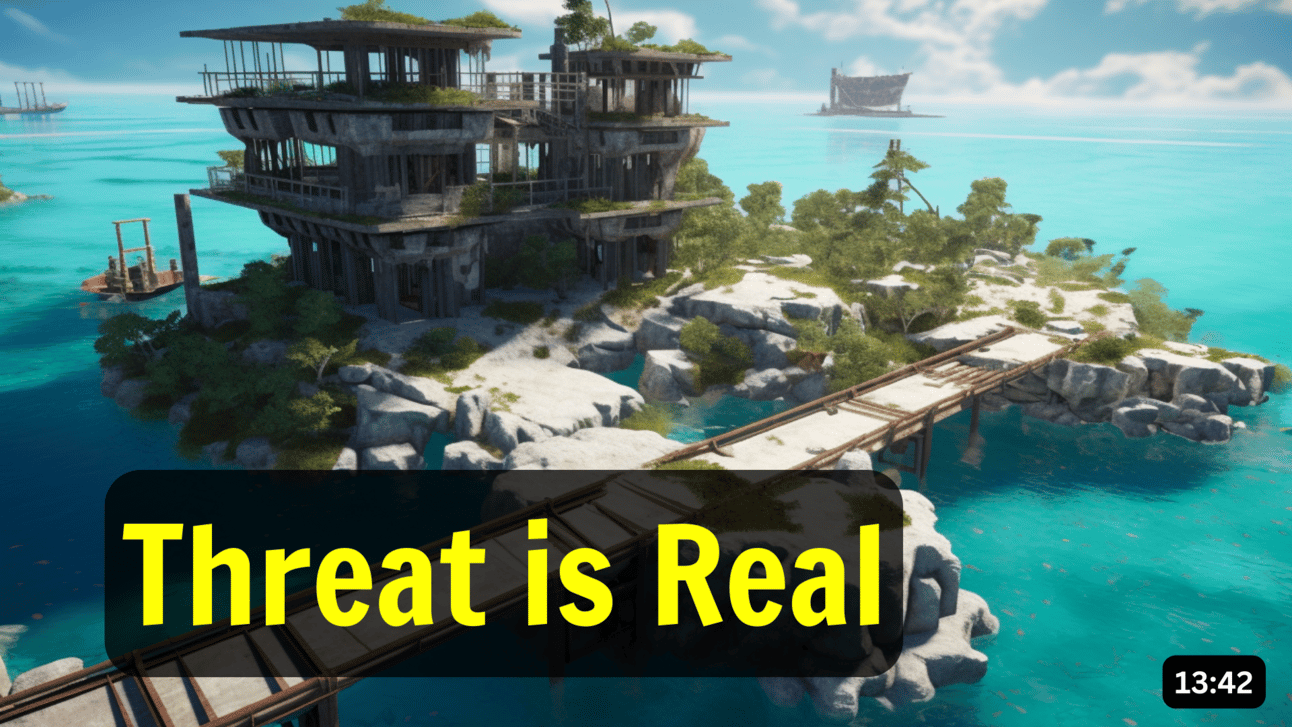
Tuvalu, a tiny South Pacific nation sees its existence threatened from rising sea levels and has made a push to twin itself in the metaverse.
An effort is being made to create a 1:1 visual twin of the country to preserve its culture, language, and way of life for future generations to enjoy and visit, should the nation come underwater.
One visiting speaker found this effort to really hit home.
“This is near and dear to my heart; my mom is from the Philippines and I can see beaches being washed away”
Other digital/visual twin projects being done involve Seoul South Korea, Tallinn Estonia, and cultural sites throughout Saudi Arabia.
Explain Like I’m Five:
Sometimes, countries want to make sure their culture and way of life are safe, even if something bad happens.
Tuvalu, a small country in the Pacific, is worried because the sea is rising and their land might go underwater. So they want to make a special copy of their country in the metaverse, just like a video game.
They want to show everything about their country, like their language, culture, and how people live.
This way, even if their land gets covered by water, people can still see and enjoy Tuvalu in the metaverse.
Other countries are looking to do the same thing to share their culture in the metaverse too.
Our Take
The metaverse might be the best history saving tool of all time!

Click Here to see all planned events

🔴
Security Concerns
From data theft to sabotage are these security concerns legitimate worries?
🟡