- Are You Metaverse Ready?
- Posts
- Digital Twins vs Simulations
Digital Twins vs Simulations
Both are similar in nature but often confused. One of the most promising uses of Digital Twins is for smarter city design and planning.

MetaverseBay
October 26, 2023
What’s up, MetaverseBay here.
We share what newcomers should know, what updates experts should know about, and what everyone may find interesting.
Let’s get down to it.

Every bit brings us closer!
This week we’re covering the Digital Twins.
So much potential, yet so little utilization.
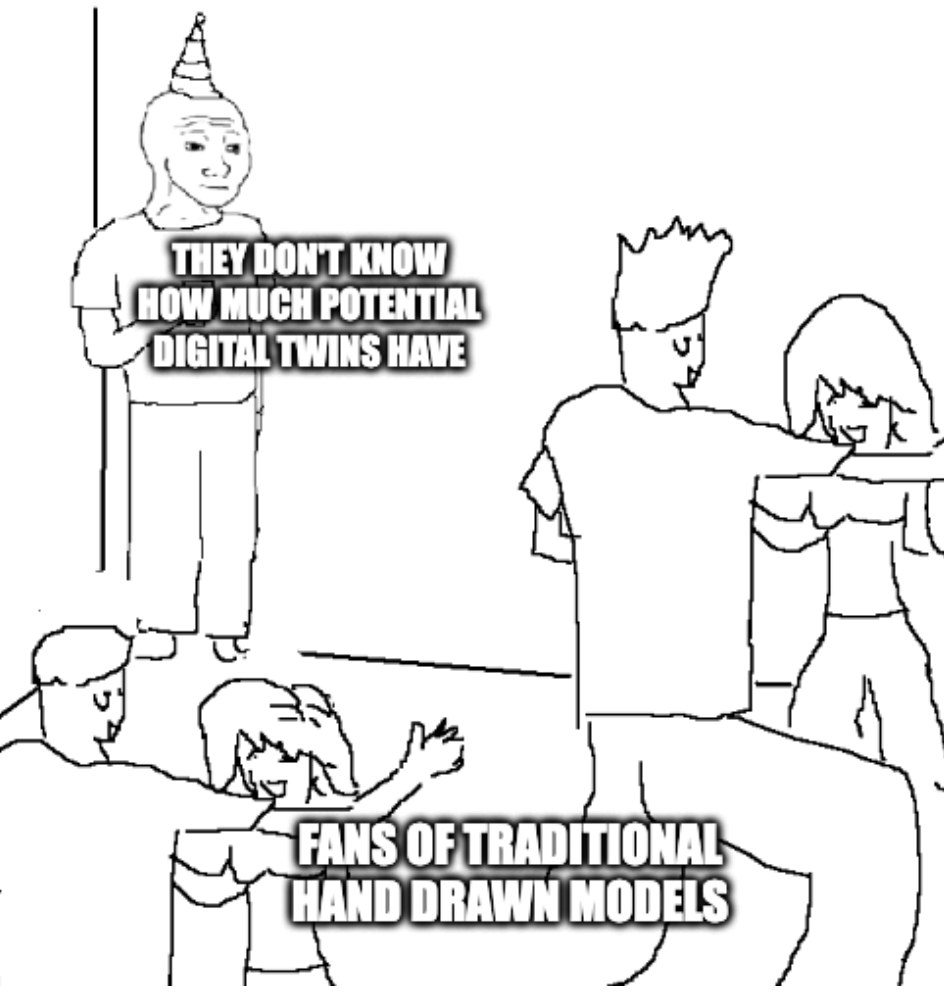
Beyond the metaverse, digital twins can catapult our cities and lives into the future.
Gone are the days of terrible city planning and expansion, digital twins are here to save the day!
DISCLAIMER: None of this is financial advice. This newsletter is strictly educational and is not investment advice or a solicitation to buy or sell any assets or to make any financial decisions. Please be careful and do your own research.


A recent addition to our newsletter is our Metaverse Liveliness Index.
It gives us an idea of public interest in the metaverse and how relevant it is at this moment in time.
We will publish a full length article explaining the breakdown and calculation soon.
This week there was a drop of around .9 points in the value of the index. Due to the fact we round to the nearest whole number this doesn’t change the value of the index.
The values of stock ETFs and tokens saw a change of plus or minus 1-2% and social media/search trends took a hit, decreasing nearly 7% week over week.
This may be due to Meta reportedly laying off metaverse staff earlier this week.

Up this week we have Computer Aided Design (CAD) Model.
This is a digital representation of an entity to describe what the physical one will look like.
These can be 2D on paper or 3D computer models, depicting materials, function, and other aspects of the machine.
CAD models are useful for prototyping, measuring, editing, and rendering to test design and processes.
CAD models include digital twins and simulations, both of which are invaluable for both engineering and metaverse bringing life to virtual tourism, emergency training, and smart cities.


Real World Norms or New World Order
Digital Twins and simulations are similar in nature but often confused.
Both are parts of CAD but the key difference lies in how the digital counterpart matches the physical device.
In simulations the digital model encompasses the same sensor information and controls as the physical counterpart.
It is able to replicate potential situations but does not replicate what is currently happening.
Digital twins, on the other hand can replicate what a system is currently doing.
They receive the system’s latest information to deliver access to a variety of scenarios and can deliver what if scenarios, predict future issues, and show current ones.
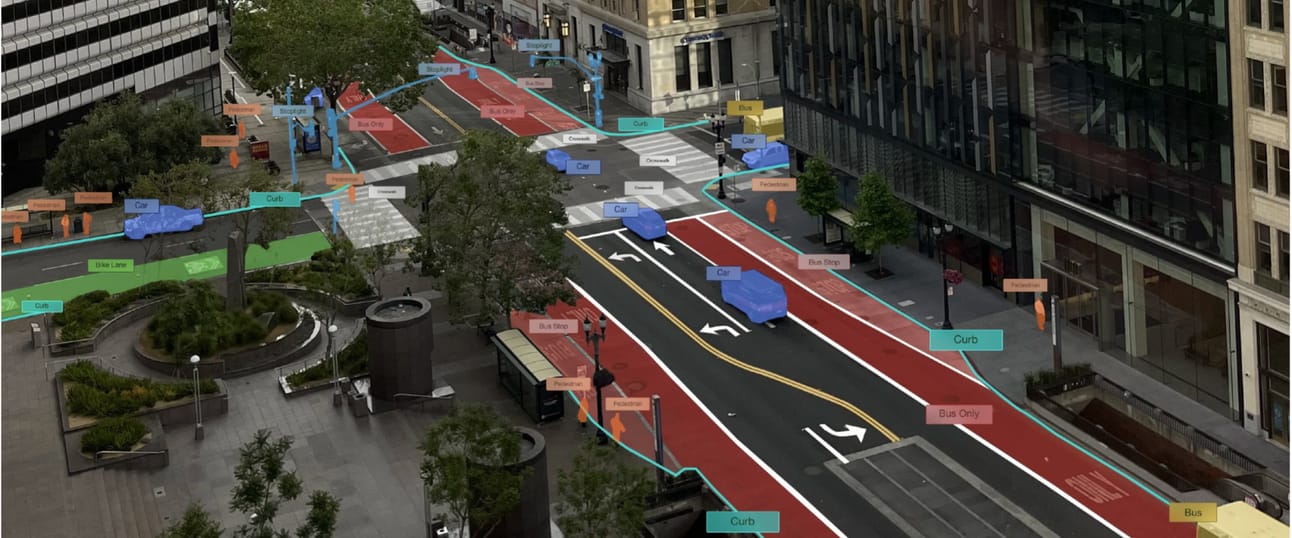
One of the most promising uses of this technology is for smarter city design and planning.
A report suggests cities could save over $280 Billion annually with this technology.
Urban planners can collect data on pedestrians, public transport use, traffic, emergency services, and other crucial services and feed it into the digital twin.
This data can determine where to build housing, put hospitals, determine how road closures will affect traffic, or even track CO2 emissions.
Digital Twin technology from existing cities can also be leveraged for future optimally planning future cities.
We are taking a break from our usual discussion format and looking to bring you something better!
In the coming weeks we hope to finish our work on it and deliver the official announcement.
We appreciate your patience and understanding.

🔴
Challenges of Digital Twins
They’re far from perfect. On the other side of the coin there are difficulties.
🟡
Myths of Digital Twins
Busting some of the common lies you hear about them
🟢
Planning Urban Cities Smartly With Digital Twins
The tremendous potential they bring
How Digital Twins Power Data
The promising future of data processing


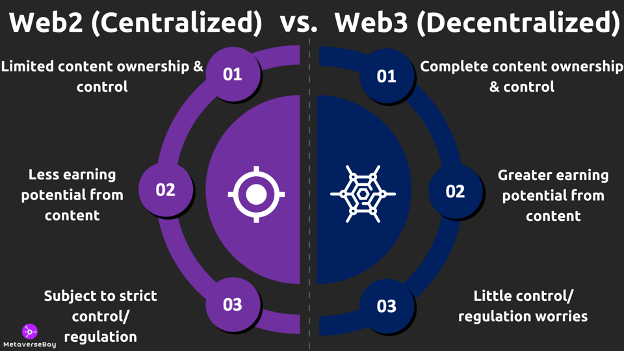
Web3 promises to decentralize the internet and have it be more community led and creator owned.
Today with Web2 we upload our content to platforms who largely take control of it, give a sliver of profits to creators, and regulate it on their standards.
Web3 pledges a transfer of power to the users granting them complete ownership of the content they share, fairer profit sharing, and regulation determined by users (we will touch on this later).
In short, centralization leaves the control and power in the hands of the host platform, users have no say in what can or cannot be done and must comply with the established rules.
Decentralization wants to change this, it seeks to give power to the people allowing users of a platform to decide what should and shouldn't be allowed.
We appreciate your feedback!
One tap helps us more than you know!


Officially 1/5th of the way!
Thank you for reading!

See you next week!