- Are You Metaverse Ready?
- Posts
- Cities of the Future
Cities of the Future
How US, South Korea and Estonia are using Digital Twins

Bay Keeper
September 25, 2023
What’s up, MetaverseBay here.
We share what newcomers should know, what experts can be updated on, and what everyone might find interesting.
Let’s get down to it.

Our journey has been great so far!
This week brings us Digital Twins.
No more doodling those silly sketches on paper. Time to create 3D models!

These models can revolutionize the way we build, organize, plan, and structure our cities. An accessible and beautiful utopia is a simulation away!
DISCLAIMER: None of this is financial advice. This newsletter is strictly educational and is not investment advice or a solicitation to buy or sell any assets or to make any financial decisions. Please be careful and do your own research.

A recent addition to our newsletter is our Metaverse Liveliness Index.
It gives us an idea of public interest in the metaverse and how relevant it is at this moment in time.
In the coming weeks we will post an article explaining the index in depth.

This week we saw no change in the index value.
There was a slight decrease in every aspect of the index (Metaverse related ETFs, top metaverse cryptos, and search/social media trends).
However, it was not significant enough to make a difference.

Up this week is CAD Model.
Computer Assisted Design (CAD) Model is a computer generated design of a building or other design which may or may not have all of the data processing of a digital twin.
These can be useful tools for simple showings of design that don’t need extensive testing in other environments or stresses.
Digital twins allow us to take this to the next level and see how wear and tear, potential hazards, and other elements will affect design and longevity of a structure.


Digital Playgrounds Building the Future
Around the world Digital Twins have captured the minds of architects, engineers, and city planners alike.
Countless cities are turning to this technology to trial new construction, planning, and future development. Estimates tell us this tech will be used in over 500 urban areas and save >$500 billion USD by 2025.
This week we polled our speakers on three major Digital Twins projects under development worldwide. One in Des Moines, Iowa as well as Seoul, South Korea and Tallinn, Estonia.
We sought to find out why these cities were undergoing digital twin efforts, what benefits they could expect, and challenges they may face.

These cities are looking for ways of expanding, making public amenities such as transport more available and accessible, build more dependable construction, and preserve their history.
Check out the image above taken from Smartcity.go.kr. It is showing a test of wind going through the city for any adverse effects.
This can be useful to determine strain on buildings and if any spaces between buildings can create gusts and become dangerous.
Estonia in particular has concerns of “sight pollution” and wants to protect the view of the city and refrain from building too high.
Per a conversation we had with one of their government officials they plan to offer all government services in the metaverse in the future.
They are still in early stages, collecting data and mapping out the city but we hope to see great things come from their project!
Des Moines, Iowa in the USA is on a similar path and looking for a way to preserve the views of their city and give developers a unique tool for selling their projects.
Imagine showing clients a lifelike, fully interactive model of an apartment under construction, complete with the view they can have from each unit.
On the builder’s side wear and tear can be tested, bringing 100 years of to a model in seconds.
Seoul is looking to solve urban problems and the need for massive continued development while maintaining the availability of goods and services throughout the city.
Digital twins can be a savior of time and money invested for these purposes.
These models certainly aren’t all positives. One speaker is an architect who has worked with digital twins and knows the difficulties in using them.
Other speakers also question if citizens should have a greater say in urban planning. Do they know better than city planners?
Listen to the discussion to get all of the finer details, personal experiences, and inside knowledge on these projects and the industry.
Be sure to comment on the video with your thoughts and experiences and we’ll discuss!
Digital Twins do more than sketches ever will!

🔴
Pros and Cons of Digital Twins
They might be more bad than good
🟡
Digital Twins vs Simulations
They are more alike than different.
🟢
How Smart Cities Can Leverage Digital Twins
Transforming the lives of businesses and citizens alike


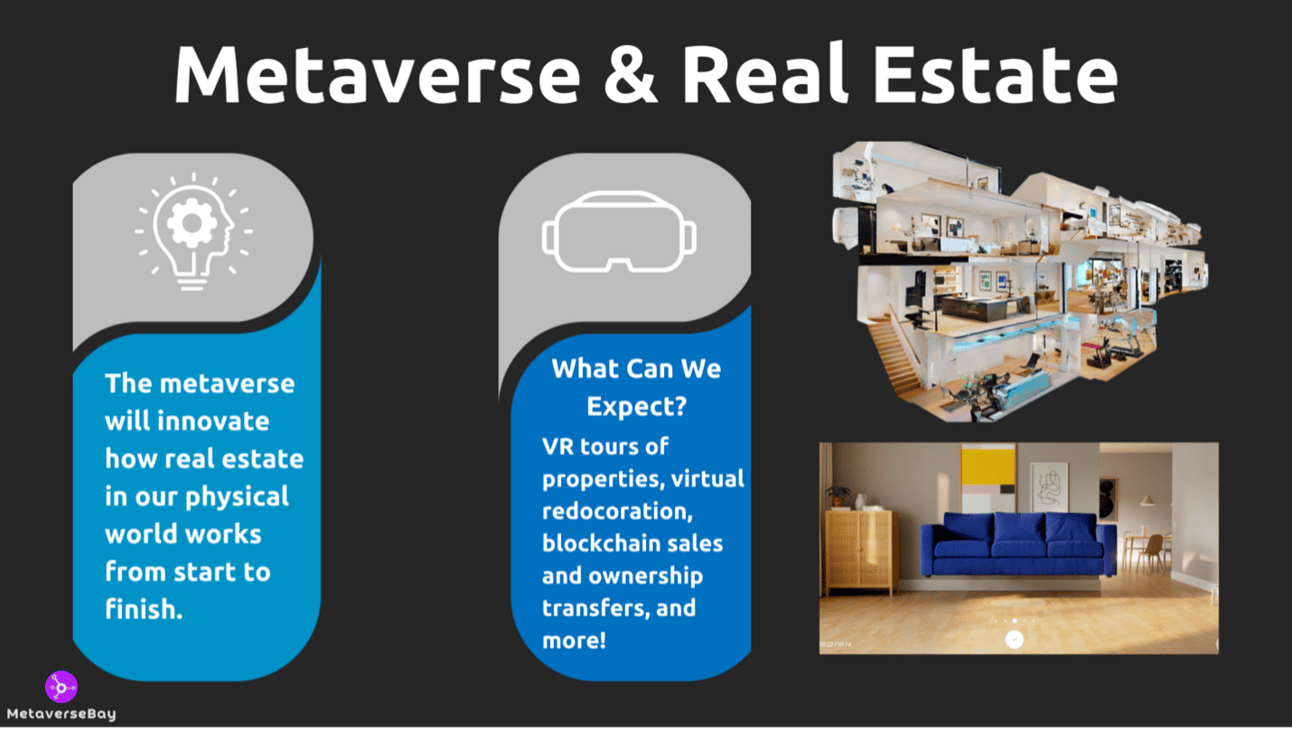
When you hear that the metaverse has the potential to revolutionize every industry, know that it’s true!
Take real estate, beyond the properties within it, real-world properties can find their place as well.
Through the creation of a digital twin (a virtual replica of the space) real estate agents can show clients how the space looks and feels in VR and provide a fully immersive digital walkthrough.
In addition, different styles of decoration and personalization can be made to allow the client to find what they like best.
We have already mentioned the immense benefits of this tool for developers but “regular people” have much to gain as well!
We appreciate your feedback!
One tap helps us more than you know!


Let us know what you’d like to see more of!
Thank you for reading!

See you next week!